


IBM
Building a Blockchain
for Business
Role: Interactive Creative Director / Head of Design

“
Next to the internet, this is the most disruptive and important technology”
Arvind Krishna
SVP, IBM Research
It started as a conversation in a basement
In early June 2015, I met with eight IBM colleagues, including VPs, Fellows, and directors, in a basement conference room at Galvanize SF to share what we knew about blockchain. Why? Clients kept asking what it was and how to use it. Some worried it could disrupt their business; others wanted to use it to streamline or rethink theirs.
Our goal was to determine if we could use this new, polarizing, and disruptive technology to create a business offering. After that two-day meeting concluded, a new emerging business unit was born. It was initially called Bluechain, and we operated discreetly as a stealth startup within IBM Emerging Technologies because we were afraid that several key customers might not support IBM using blockchain technology. I was a founding member of the new unit and its only designer.
What is blockchain?
A quick primer I share with clients

A blockchain is a data structure that makes it possible to create a digital ledger of transactions and share it on a distributed network

It uses cryptography to allow each participant on the network to transact on the indelible ledger in a secure way.

It fosters a new generation of transactional applications that establish trust, accountability and transparency.

It creates cost-efficient business networks where virtually anything of value can be tracked and traded—without requiring a central point of control.

Blockchain underpins Bitcoin, an unregulated, censorship-resistant shadow currency. Bitcoin is the first blockchain application. However, blockchain is not bitcoin.
We started by conducting
discovery research

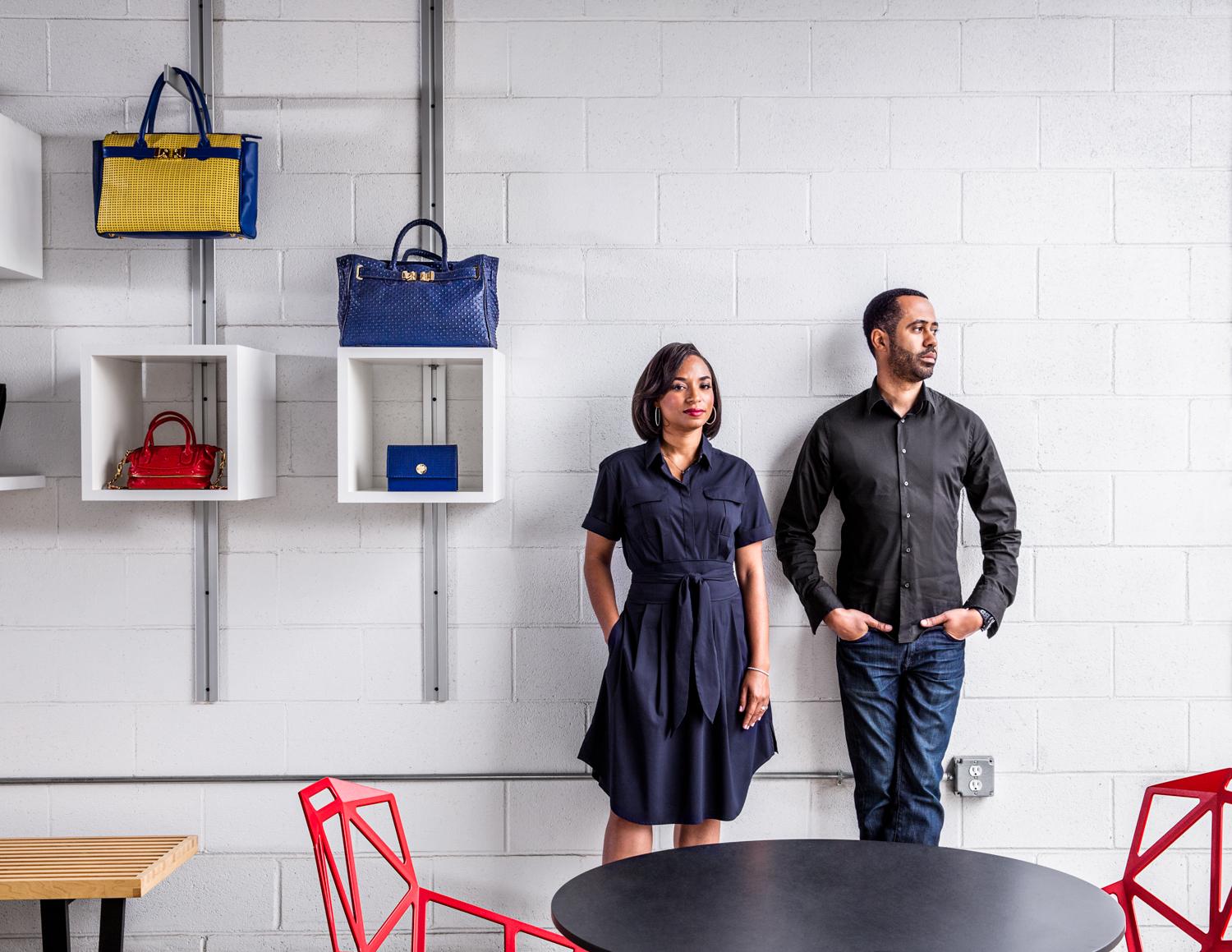

The team knew several clients such as Barclays, Ford, LSEG, Visa, and Wells Fargo, that were actively experimenting with blockchain technology.
Our group wanted to understand better how they used the technology and why. Our findings concluded that banks and manufacturing companies all tested and experimented with Ethereum and Bitcoin blockchains. They could not use them because they:


Didn’t want to use cryptocurrencies to fuel transactions

Anonymous identities are problematic for anti-money laundering (AML) and know your customer (KYC) compliance and regulations

Not all transactions can be put on a public distributed ledger for all to see
Pain points
We observed that building a blockchain network, especially an Ethereum network, was really, really hard for developers. Many didn’t understand the technology or the use cases. Those who did would spend a whole weekend at a hackathon trying to stand up a network. This left them little or no time to troubleshoot and develop an application that could display transactions. Afterward, we found that developers would spend weeks finessing those networks into proof of concepts.
Outcome

IBM and like-minded companies such as London Stock Exchange (LSEG) and Digital Assets Holdings (DAH), should create a new blockchain. It would be open sourced and managed through the Linux Foundation so that it could become a standard for business and therefore be a benefit to all businesses.
The name of the open source project was called Hyperledger. It was publicly announced in December 2015.
IBM’s code contributions have gone into an incubator project called the Hyperledger Fabric.
This new open source blockchain standard would be focused on five main pillars:

No Cryptocurrencies

Known Identities

Confidential Transactions

Smart Contracts

Permissioned Networks
IBM Blockchain was formalized in February, 2016. To date, it is the fastest emerging business unit to become a division at IBM.
Our mission was to build the products and service offerings on top of the Hyperledger Fabric. Paired with AI and IoT, blockchain can be a fundamental differentiator for IBM.
Leadership
At IBM, I had an overarching Creative Direction Role. I grew, managed, mentored, and collaborated directly with 13 designers (3 Leads, 4 Visual, 4 UX, 1 Researcher, 1 FED) in three locations (SF, RTP, UK).
Today, several of the leads are in management and leadership roles at IBM, DocuSign, and startups.
Together we worked on:
Products services
- IBM Blockchain Platform on IBM Cloud Solutions
- Food Trust w/Walmart, Tradelens w/Maersk
- Marketing + Branding
- Website and Brand Guidelines
Open Source
- Hyperledger Fabric
- Hyperledger Composer
IBM Blockchain growth in 2016
72
Signed PoC / First Projects / Design Sessions
4
Garage locations launched: NY, Singapore, Tokyo, San Francisco
16
Clients as public references: Walmart, ABN AMRO, CLS, BAML, BNYM, Mizuho, Credit Mutuel Arkea, LSEG, JPX, Kouvola Finland
58M
Estimated social conversations generated impressions around IBM at SIBOS 2016 from 15,048 twitter mentions by 8,833 users from 9/15 - 10/5
61M
Estimated impressions from 11,278 tweets by 8525 users in the first 24 hours since the announcement about new blockchain services from Reuters, Wired, Ars Technica, American Banker, etc
2
IBM Blockchain as-a-service offerings:
Multi-tenant starter plan – with 4000 instances on Bluemix.
High-security plan - pioneering highest security and highest density blockchain network with System Z as underpinnings available via IBM Cloud (65 members)
IBM Blockchain growth in 2017
#1
Leader in enterprise blockchain technology (Juniper Research)
183
Corporate members backing the Hyperledger Project
400+
Client projects
2.6k
Stars on GitHub for Fabric. Today: 16K
1.5k
Blockchain professionals on staff
4k
Hyperledger Developers
5M
Lines of Hyperledger code contributed by IBM
35
Active networks. Fully operational across business channels.
Branding
In early 2017, I partnered with IBM Brand, Athletics NYC, Co:Collective, and my new marketing team on visual and verbal guidelines for IBM Blockchain. It was also the pilot for IBM’s multi-year rebrand.
I was the subject-matter expert on blockchain, our customers, and our products. I pushed to center the story on supply chain and banking, where we already had customers, and for visuals that told shorter, clearer stories.
The guidelines became the reference for anyone working on the brand.
Our goal was a brand that captured blockchain’s power and linked this emerging technology to IBM’s data-driven industry verticals.
The brand story: We’re entering a new era. One where truth isn’t subjective, but collective. Where radical transparency is uprooting how we interact, transact, and grow. Where together, as newly engaged communities, we’re finally able to solve problems we thought were just the cost of business. And behind it all is blockchain.
Athletics brought us several directions. I pushed for the open visual grid because it complemented Fabric, the open-source framework behind our blockchain network, and signaled security and open access at the same time. The grid also gave us a clean system for telling stories about blockchain as a new way of doing global business, one that is quietly reshaping some of the world’s largest and most complex industries.
What I learned
I was fortunate that Jerry Cuomo took me under his wing. He gave me the autonomy to lead design and experiment, and he included me in conversations with Arvind and other senior leaders at IBM. That exposure, and watching how he prepared for and responded to questions and challenges, shaped how I lead today. The biggest takeaway was that you have to shape a good story and keep evolving it, so folks can understand it and connect with it.
Credits: Ogilvy (Agency)
“
I believe blockchain will do for trusted interactions what the internet has done for information.”
Ginni Rometty
CEO, IBM
Contributions
Product design direction, copywriting, strategy, storytelling, research, evelopment
Collaborators
Co-founders: Binh Nguyen (Architect), David Kravitz (Research), Frank Lu (Product), Henning Diedrich (SWE), Jerry Cuomo (VP/IBM Fellow), Joe Latone (Research), John Cohn (IBM Fellow), John Wolpert (Director, Product)

IBM
Building a Blockchain
for Business
Role: Interactive Creative Director / Head of Design
“
Next to the internet, this is the most disruptive and important technology”
Arvind Krishna
SVP, IBM Research
It started as a conversation in a basement
In early June 2015, I met with eight IBM colleagues, including VPs, Fellows, and directors, in a basement conference room at Galvanize SF to share what we knew about blockchain. Why? Clients kept asking what it was and how to use it. Some worried it could disrupt their business; others wanted to use it to streamline or rethink theirs.
Our goal was to determine if we could use this new, polarizing, and disruptive technology to create a business offering. After that two-day meeting concluded, a new emerging business unit was born. It was initially called Bluechain, and we operated discreetly as a stealth startup within IBM Emerging Technologies because we were afraid that several key customers might not support IBM using blockchain technology. I was a founding member of the new unit and its only designer.
What is blockchain?
A quick primer I share with clients

A blockchain is a data structure that makes it possible to create a digital ledger of transactions and share it on a distributed network

It uses cryptography to allow each participant on the network to transact on the indelible ledger in a secure way.

It fosters a new generation of transactional applications that establish trust, accountability and transparency.

It creates cost-efficient business networks where virtually anything of value can be tracked and traded—without requiring a central point of control.

Blockchain underpins Bitcoin, an unregulated, censorship-resistant shadow currency. Bitcoin is the first blockchain application. However, blockchain is not bitcoin.
We started by conducting
discovery research
The team knew several clients such as Barclays, Ford, LSEG, Visa, and Wells Fargo, that were actively experimenting with blockchain technology.
Our group wanted to understand better how they used the technology and why. Our findings concluded that banks and manufacturing companies all tested and experimented with Ethereum and Bitcoin blockchains. They could not use them because they:

Didn’t want to use cryptocurrencies to fuel transactions

Anonymous identities are problematic for anti-money laundering (AML) and know your customer (KYC) compliance and regulations

Not all transactions can be put on a public distributed ledger for all to see
Pain points
We observed that building a blockchain network, especially an Ethereum network, was really, really hard for developers. Many didn’t understand the technology or the use cases. Those who did would spend a whole weekend at a hackathon trying to stand up a network. This left them little or no time to troubleshoot and develop an application that could display transactions. Afterward, we found that developers would spend weeks finessing those networks into proof of concepts.
Outcome

We recommended that IBM and like-minded companies, such as the London Stock Exchange Group (LSEG) and Digital Asset Holdings (DAH), create a new open-source blockchain, managed through the Linux Foundation so it could become a standard for business.
The name of the open source project was called Hyperledger. It was publicly announced in December 2015.
IBM’s code contributions have gone into an incubator project called the Hyperledger Fabric.
This new open source blockchain standard would be focused on five main pillars
No Cryptocurrencies

Known Identities

Confidential Transactions

Smart Contracts

Permissioned Networks
IBM Blockchain was formalized in February, 2016. To date, it is the fastest emerging business unit to become a division at IBM.
Our mission was to build the products and service offerings on top of the Hyperledger Fabric. Paired with AI and IoT, blockchain can be a fundamental differentiator for IBM.
Leadership
At IBM, I had an overarching Creative Direction Role. I grew, managed, mentored, and collaborated directly with 13 designers (3 Leads, 4 Visual, 4 UX, 1 Researcher, 1 FED) in three locations (SF, RTP, UK).
Today, several of the leads are in management and leadership roles at IBM, DocuSign, and startups.
Together we worked on:
Products services
- IBM Blockchain Platform on IBM Cloud Solutions
- Food Trust w/Walmart, Tradelens w/Maersk
- Marketing + Branding
- Website and Brand Guidelines
Open Source
- Hyperledger Fabric
- Hyperledger Composer
IBM Blockchain growth in 2016
72
Signed PoC / First Projects / Design Sessions
4
Garage locations launched: NY, Singapore, Tokyo, San Francisco
16
Clients as public references: Walmart, ABN AMRO, CLS, BAML, BNYM, Mizuho, Credit Mutuel Arkea, LSEG, JPX, Kouvola Finland
58M
Estimated social conversations generated impressions around IBM at SIBOS 2016 from 15,048 twitter mentions by 8,833 users from 9/15 - 10/5
61M
Estimated impressions from 11,278 tweets by 8525 users in the first 24 hours since the announcement about new blockchain services from Reuters, Wired, Ars Technica, American Banker, etc
2
IBM Blockchain as-a-service offerings:
Multi-tenant starter plan – with 4000 instances on Bluemix.
High-security plan - pioneering highest security and highest density blockchain network with System Z as underpinnings available via IBM Cloud (65 members)
IBM Blockchain growth in 2017
#1
Leader in enterprise blockchain technology (Juniper Research)
183
Corporate members backing the Hyperledger Project
400+
Client projects
35
Active networks. Fully operational across business channels.
2.6k
Stars on GitHub for Fabric. Today: 16K
1.5k
Blockchain professionals on staff
4k
Hyperledger Developers
5M
Lines of Hyperledger code contributed by IBM
Branding
In early 2017, I partnered with IBM Brand, Athletics NYC, Co:Collective, and my new marketing team on visual and verbal guidelines for IBM Blockchain. It was also the pilot for IBM’s multi-year rebrand.
I was the subject-matter expert on blockchain, our customers, and our products. I pushed to center the story on supply chain and banking, where we already had customers, and for visuals that told shorter, clearer stories.
The guidelines became the reference for anyone working on the brand.
Our goal was a brand that captured blockchain’s power and linked this emerging technology to IBM’s data-driven industry verticals.
The brand story: We’re entering a new era. One where truth isn’t subjective, but collective. Where radical transparency is uprooting how we interact, transact, and grow. Where together, as newly engaged communities, we’re finally able to solve problems we thought were just the cost of business. And behind it all is blockchain.
Athletics brought us several directions. I pushed for the open visual grid because it complemented Fabric, the open-source framework behind our blockchain network, and signaled security and open access at the same time. The grid also gave us a clean system for telling stories about blockchain as a new way of doing global business, one that is quietly reshaping some of the world’s largest and most complex industries.
What I learned
I was fortunate that Jerry Cuomo took me under his wing. He gave me the autonomy to lead design and experiment, and he included me in conversations with Arvind and other senior leaders at IBM. That exposure, and watching how he prepared for and responded to questions and challenges, shaped how I lead today. The biggest takeaway was that you have to shape a good story and keep evolving it, so folks can understand it and connect with it.
Credits: Ogilvy (Agency)
“
I believe blockchain will do for trusted interactions what the internet has done for information.”
Ginni Rometty
CEO, IBM
Contributions
Product design direction, copywriting, strategy, storytelling, research, evelopment
Collaborators
Co-founders: Binh Nguyen (Architect), David Kravitz (Research), Frank Lu (Product), Henning Diedrich (SWE), Jerry Cuomo (VP/IBM Fellow), Joe Latone (Research), John Cohn (IBM Fellow), John Wolpert (Director, Product)

IBM
Building a Blockchain
for Business
Role: Interactive Creative Director / Head of Design
“
Next to the internet, this is the most disruptive and important technology”
Arvind Krishna
SVP, IBM Research
It started as a conversation in a basement
In early June 2015, I met with eight IBM colleagues, including VPs, Fellows, and directors, in a basement conference room at Galvanize SF to share what we knew about blockchain. Why? Clients kept asking what it was and how to use it. Some worried it could disrupt their business; others wanted to use it to streamline or rethink theirs.
Our goal was to determine if we could use this new, polarizing, and disruptive technology to create a business offering. After that two-day meeting concluded, a new emerging business unit was born. It was initially called Bluechain, and we operated discreetly as a stealth startup within IBM Emerging Technologies because we were afraid that several key customers might not support IBM using blockchain technology. I was a founding member of the new unit and its only designer.
What is blockchain?
A quick primer I share with clients

A blockchain is a data structure that makes it possible to create a digital ledger of transactions and share it on a distributed network
It uses cryptography to allow each participant on the network to transact on the indelible ledger in a secure way
It fosters a new generation of transactional applications that establish trust, accountability and transparency
It creates cost-efficient business networks where virtually anything of value can be tracked and traded—without requiring a central point of control
Blockchain underpins Bitcoin, an unregulated, censorship-resistant shadow currency. Bitcoin is the first blockchain application. However, blockchain is not bitcoin
We started by conducting
discovery research
The team knew several clients such as Barclays, Ford, LSEG, Visa, and Wells Fargo, that were actively experimenting with blockchain technology.
Our group wanted to understand better how they used the technology and why. Our findings concluded that banks and manufacturing companies all tested and experimented with Ethereum and Bitcoin blockchains. They could not use them because they:
Didn’t want to use cryptocurrencies to fuel transactions
Anonymous identities are problematic for anti-money laundering (AML) and know your customer (KYC) compliance and regulations
Not all transactions can be put on a public distributed ledger for all to see
Pain points
We observed that building a blockchain network, especially an Ethereum network, was really, really hard for developers. Many didn’t understand the technology or the use cases. Those who did would spend a whole weekend at a hackathon trying to stand up a network. This left them little or no time to troubleshoot and develop an application that could display transactions. Afterward, we found that developers would spend weeks finessing those networks into proof of concepts.
Outcome

We recommended that IBM and like-minded companies, such as the London Stock Exchange Group (LSEG) and Digital Asset Holdings (DAH), create a new open-source blockchain, managed through the Linux Foundation so it could become a standard for business.
The name of the open source project was called Hyperledger. It was publicly announced in December 2015.
IBM’s code contributions have gone into an incubator project called the Hyperledger Fabric.
This new open source blockchain standard would be focused on five main pillars
No Cryptocurrencies
Known Identities
Confidential Transactions
Smart Contracts
Permissioned Networks
IBM Blockchain was formalized in February, 2016. To date, it is the fastest emerging business unit to become a division at IBM.
Our mission was to build the products and service offerings on top of the Hyperledger Fabric. Paired with AI and IoT, blockchain can be a fundamental differentiator for IBM.
Leadership
At IBM, I had an overarching Creative Direction Role. I grew, managed, mentored, and collaborated directly with 13 designers (3 Leads, 4 Visual, 4 UX, 1 Researcher, 1 FED) in three locations (SF, RTP, UK).
Today, several of the leads are in management and leadership roles at IBM, DocuSign, and startups.
Together we worked on:
Products services
- IBM Blockchain Platform on IBM Cloud Solutions
- Food Trust w/Walmart, Tradelens w/Maersk
- Marketing + Branding
- Website and Brand Guidelines
Open Source
- Hyperledger Fabric
- Hyperledger Composer
IBM Blockchain growth in 2016
72
Signed PoC / First Projects / Design Sessions
4
Garage locations launched: NY, Singapore, Tokyo, San Francisco
16
Clients as public references: Walmart, ABN AMRO, CLS, BAML, BNYM, Mizuho, Credit Mutuel Arkea, LSEG, JPX, Kouvola Finland
58M
Estimated social conversations generated impressions around IBM at SIBOS 2016 from 15,048 twitter mentions by 8,833 users from 9/15 - 10/5
61M
Estimated impressions from 11,278 tweets by 8525 users in the first 24 hours since the announcement about new blockchain services from Reuters, Wired, Ars Technica, American Banker, etc
2
IBM Blockchain as-a-service offerings:
Multi-tenant starter plan – with 4000 instances on Bluemix.
High-security plan - pioneering highest security and highest density blockchain network with System Z as underpinnings available via IBM Cloud (65 members)
IBM Blockchain growth in 2017
#1
Leader in enterprise blockchain technology (Juniper Research)
183
Corporate members backing the Hyperledger Project
400+
Client projects
35
Active networks. Fully operational across business channels.
2.6k
Stars on GitHub for Fabric. Today: 16K
1.5k
Blockchain professionals on staff
4k
Hyperledger Developers
5M
Lines of Hyperledger code contributed by IBM
Branding
In early 2017, I partnered with IBM Brand, Athletics NYC, Co:Collective, and my new marketing team on visual and verbal guidelines for IBM Blockchain. It was also the pilot for IBM’s multi-year rebrand.
I was the subject-matter expert on blockchain, our customers, and our products. I pushed to center the story on supply chain and banking, where we already had customers, and for visuals that told shorter, clearer stories.
The guidelines became the reference for anyone working on the brand.
Our goal was a brand that captured blockchain’s power and linked this emerging technology to IBM’s data-driven industry verticals.
The brand story: We’re entering a new era. One where truth isn’t subjective, but collective. Where radical transparency is uprooting how we interact, transact, and grow. Where together, as newly engaged communities, we’re finally able to solve problems we thought were just the cost of business. And behind it all is blockchain.
Athletics brought us several directions. I pushed for the open visual grid because it complemented Fabric, the open-source framework behind our blockchain network, and signaled security and open access at the same time. The grid also gave us a clean system for telling stories about blockchain as a new way of doing global business, one that is quietly reshaping some of the world’s largest and most complex industries.
What I learned
I was fortunate that Jerry Cuomo took me under his wing. He gave me the autonomy to lead design and experiment, and he included me in conversations with Arvind and other senior leaders at IBM. That exposure, and watching how he prepared for and responded to questions and challenges, shaped how I lead today. The biggest takeaway was that you have to shape a good story and keep evolving it, so folks can understand it and connect with it.
Credits: Ogilvy (Agency)
“
I believe blockchain will do for trusted interactions what the internet has done for information.”
Ginni Rometty
CEO, IBM
Contributions
Product design direction, copywriting, strategy, storytelling, research, evelopment
Collaborators
Co-founders: Binh Nguyen (Architect), David Kravitz (Research), Frank Lu (Product), Henning Diedrich (SWE), Jerry Cuomo (VP/IBM Fellow), Joe Latone (Research), John Cohn (IBM Fellow), John Wolpert (Director, Product)